Jingfan Chen
Ph.D. Student @ The Hong Kong Polytechnic University

jingfan.chen [at] connect.polyu.hk
I am a Ph.D. student at The Hong Kong Polytechnic University (PolyU), advised by Prof. Qing Li (IEEE Fellow), Prof. Zhen Lei (IEEE Fellow) and Prof. Zhaoxiang Zhang. Before that, I received my M.S. in Computer Science from Nanjing University and my B.S. in Software Engineering from Shandong University. I have also been a research intern on the post-training team at Shanghai AI Laboratory and at Tencent Game AI Lab.
My research focuses on Efficient LLM Agents, Agentic Computer Use and Recursive Self-Improvement (RSI).
Recursive Self-Improvement — improve the improver
Research Questions
- What makes a computer-use agent's self-improvement recursive, rather than a solver updated by a fixed improver?
- How can we tell whether an updated improver really makes later rounds of improvement more effective, at the same budget?
Representative Works
- Ongoing work on improver-level self-modification for computer-use agents and how to evaluate it.
Code as the Substrate — target · evidence · verification
Research Questions
- Why does recursion need code: what makes an improver's own mechanism modifiable, its changes attributable, and its results checkable?
- How far can executable checks on software state (UI source, DOM, app state) make verifying a new improver affordable, and where must evidence still come from the live environment?
Representative Works
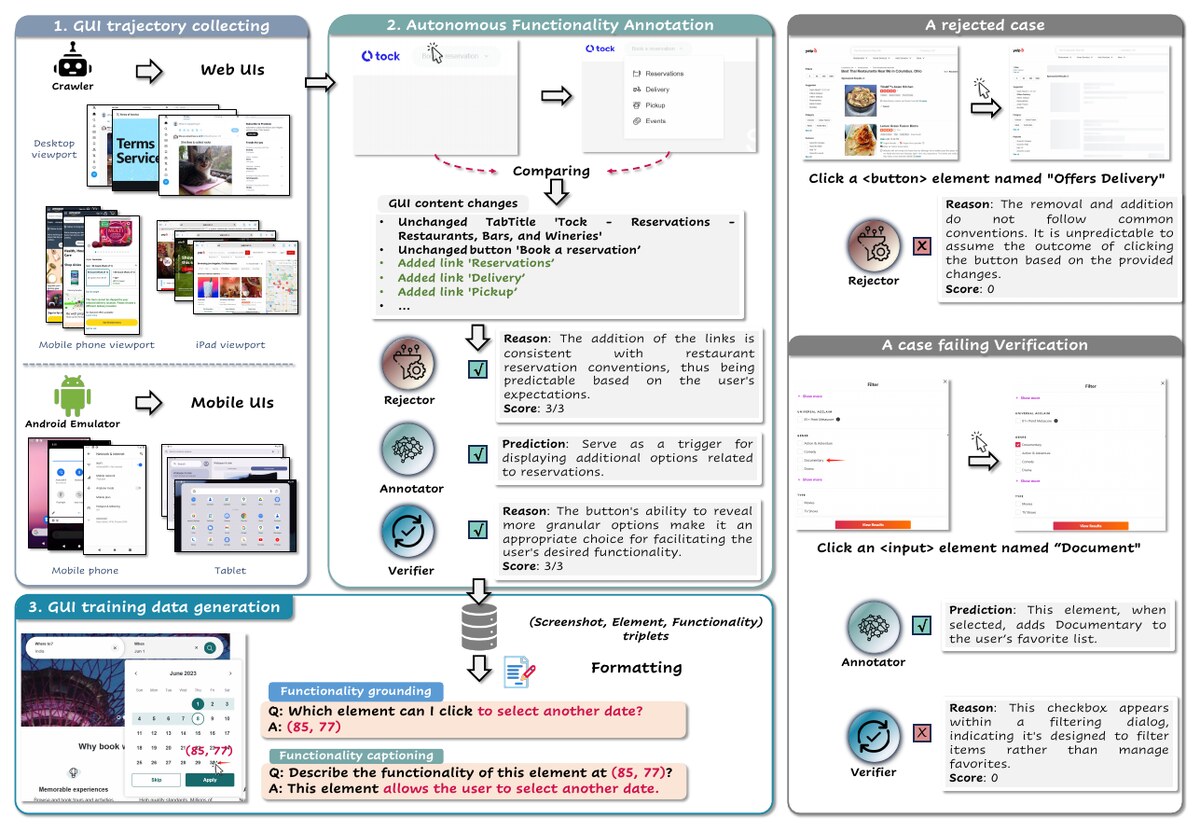
- AutoGUI: Scaling GUI Grounding with Automatic Functionality Annotations from LLMs (ACL 2025): infers what a UI element does from how the UI's source code changes after a simulated interaction.
- Ongoing work on code as the substrate for recursive self-improvement.
Computer Use — where the loop meets real software
Research Questions
- How does an improvement loop carry over to agents that act on real software, where task success is only partly checkable by code?
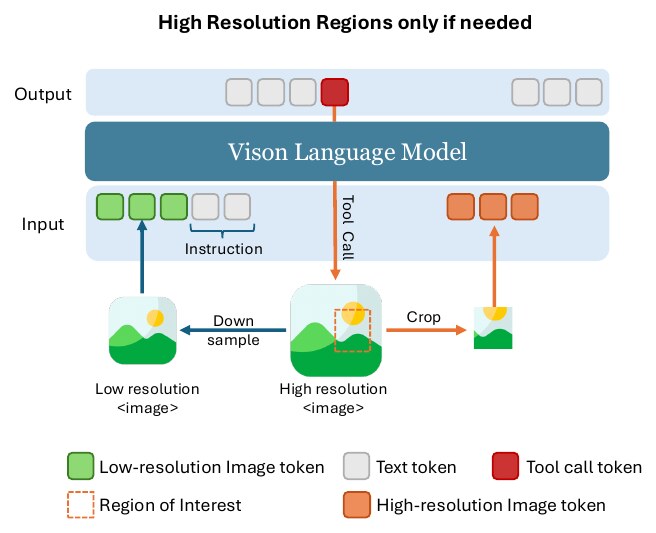
- When is an extra look at the screen, or an extra round of supervision, worth its cost, and how can an agent spend it only where it is needed?
Representative Works
GUI grounding & interaction
- FoveaUI: Foveated On-demand Visual Evidence Acquisition for GUI Grounding (ACM MM 2026)
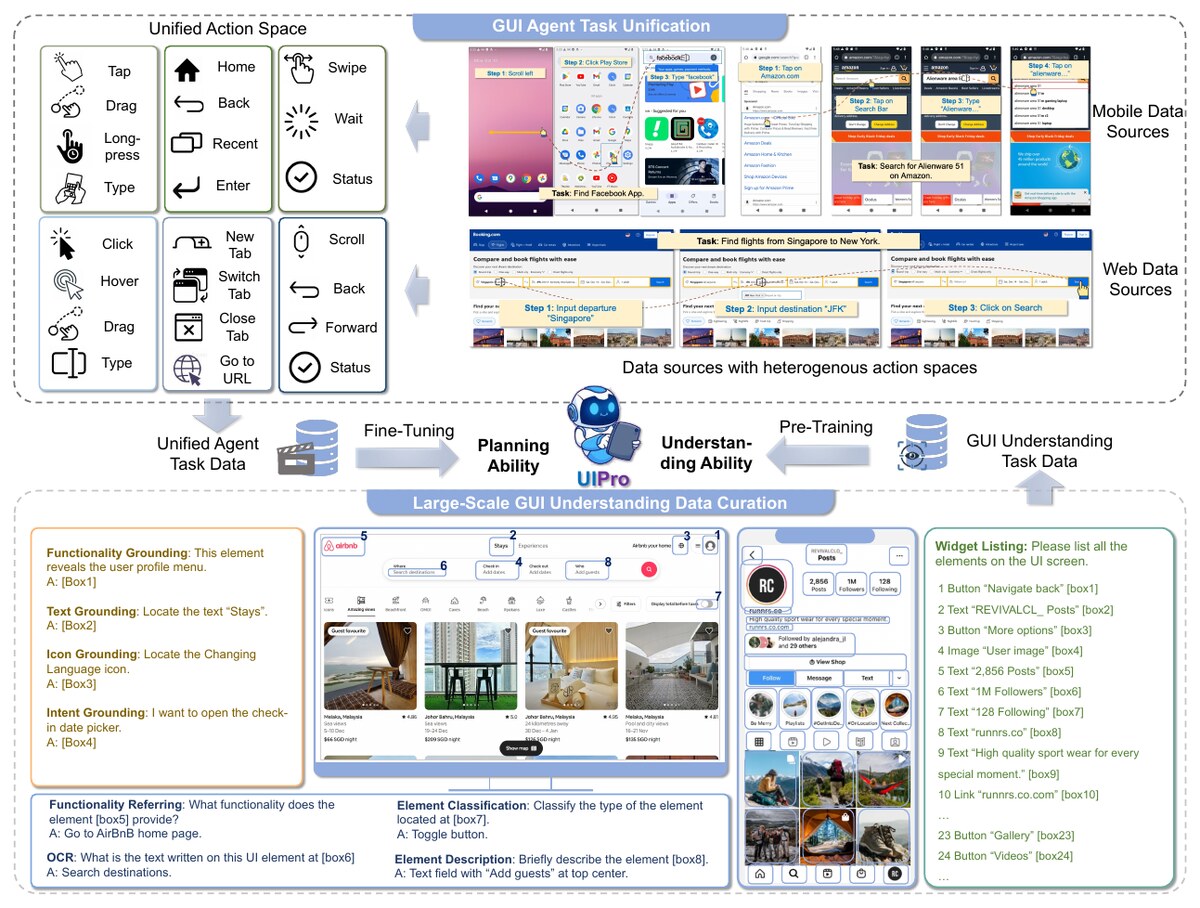
- UIPro: Unleashing Superior Interaction Capability For GUI Agents (ICCV 2025)
- AutoGUI: Scaling GUI Grounding with Automatic Functionality Annotations from LLMs (ACL 2025)
Visual perception & reasoning for agents
Applications — digital world · physical world
Research Questions
- How far does an improvement loop built for software reach in the digital world, on long-horizon tasks such as deep search?
- What changes in the physical world, where outcomes cannot be checked by running code and evidence must come from 3D scenes, simulators or real environments?
Representative Works
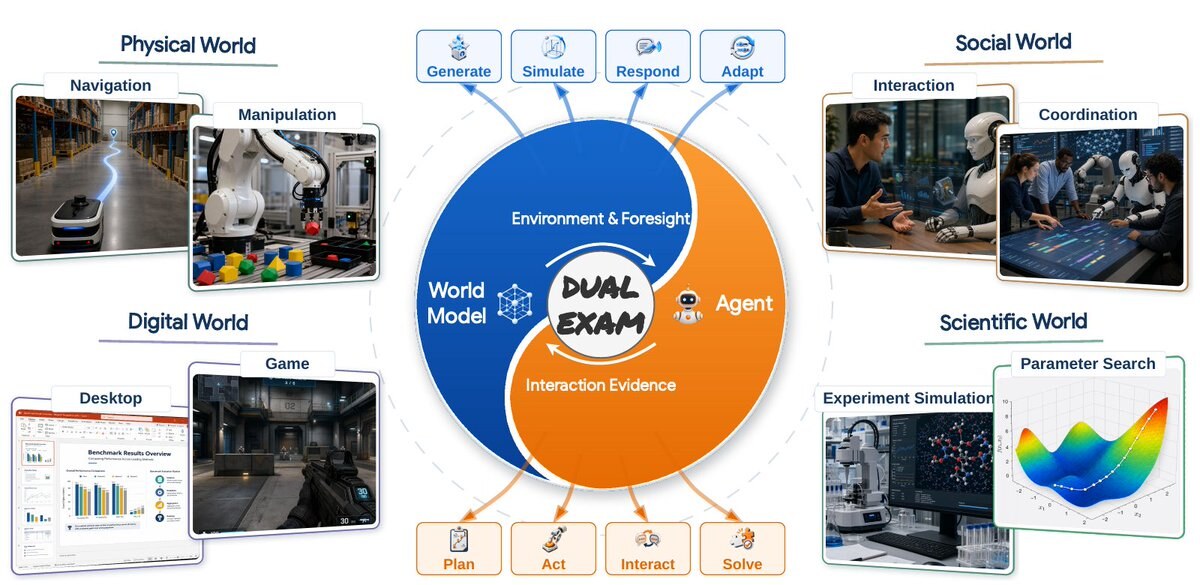
- Dual Exam: Controlled Evaluation of Multimodal Agents and World Models (XGEN Labs Tech Report 2026, as core contributor): agent and world-model tracks across physical, digital, social and scientific tasks.
Digital world
- Ongoing work on agentic RL and self-reflection for long-horizon deep-search agents.
Physical world
- Ongoing work on spatial reasoning in 3D scenes for multimodal models.
My earlier work focused on information retrieval.
experience

Research Intern (Qingyun Program). Post-training VLMs for spatial reasoning with programmatically synthesized 3D-scene QA data.

Research Intern, with Wenwei Zhang and Kai Chen. End-to-end agentic RL for long-horizon deep-search agents, RL infrastructure, and evaluation data for Intern-S1.
news
| Sep 24, 2026 | Released Dual Exam with XGEN Labs as a core contributor: a benchmark for multimodal agents and world models across physical, digital, social and scientific tasks. |
|---|---|
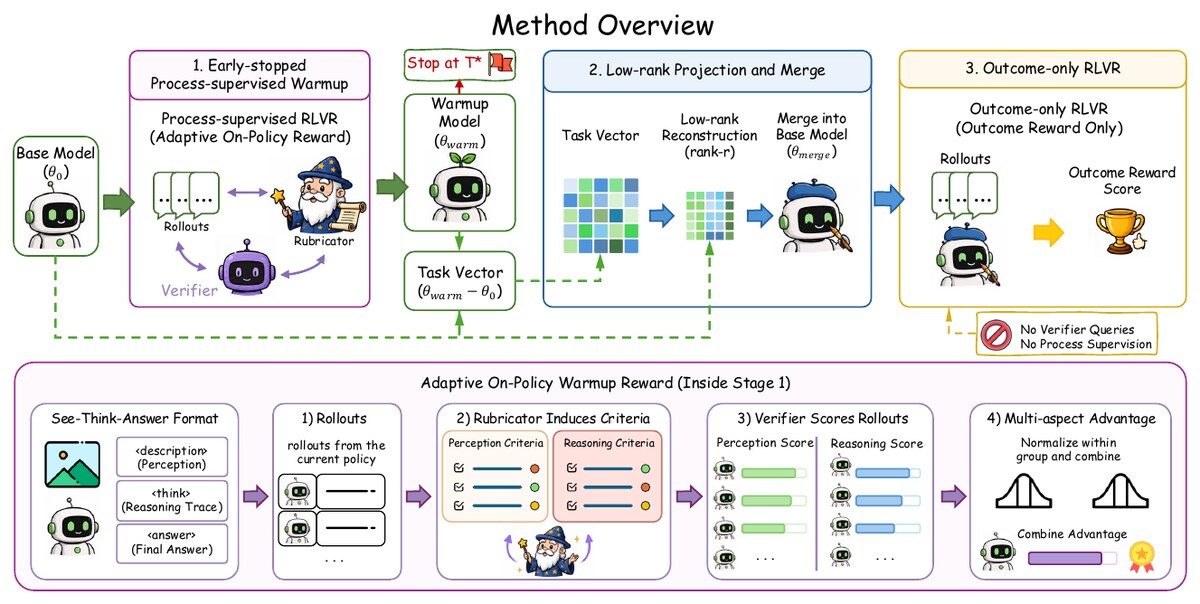
| Aug 20, 2026 | Our paper Warm Up with a Rubric, Then Merge, on keeping the grounding gains of process supervision without its reasoning cost, is accepted to EMNLP 2026.  |
| Jul 07, 2026 | Our paper FoveaUI, on-demand high-resolution evidence acquisition for efficient GUI grounding, is accepted to ACM MM 2026. |
| Jun 26, 2025 | Our paper UIPro, a generalist GUI agent with a unified cross-platform action space, is accepted to ICCV 2025. |
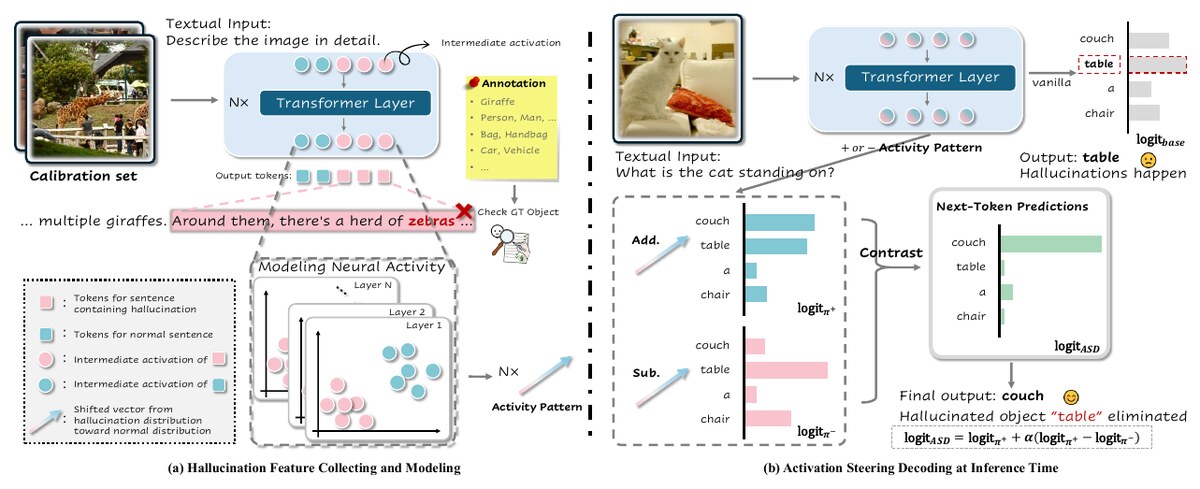
| May 16, 2025 | Two papers accepted to ACL 2025 (main): AutoGUI on scaling GUI grounding with automatic functionality annotations, and Activation Steering Decoding on mitigating hallucination in vision-language models. |
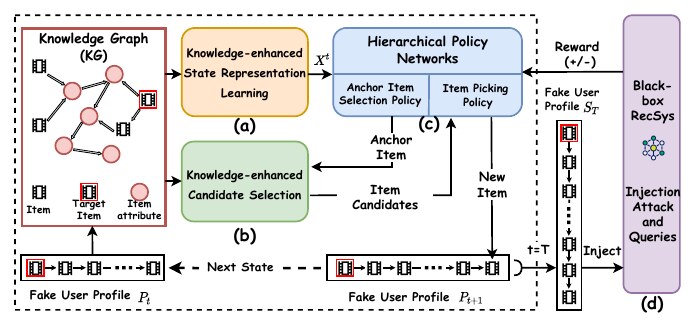
| Jan 25, 2023 | Our paper on fairly adaptive negative sampling for recommendation is accepted to WWW 2023. |